

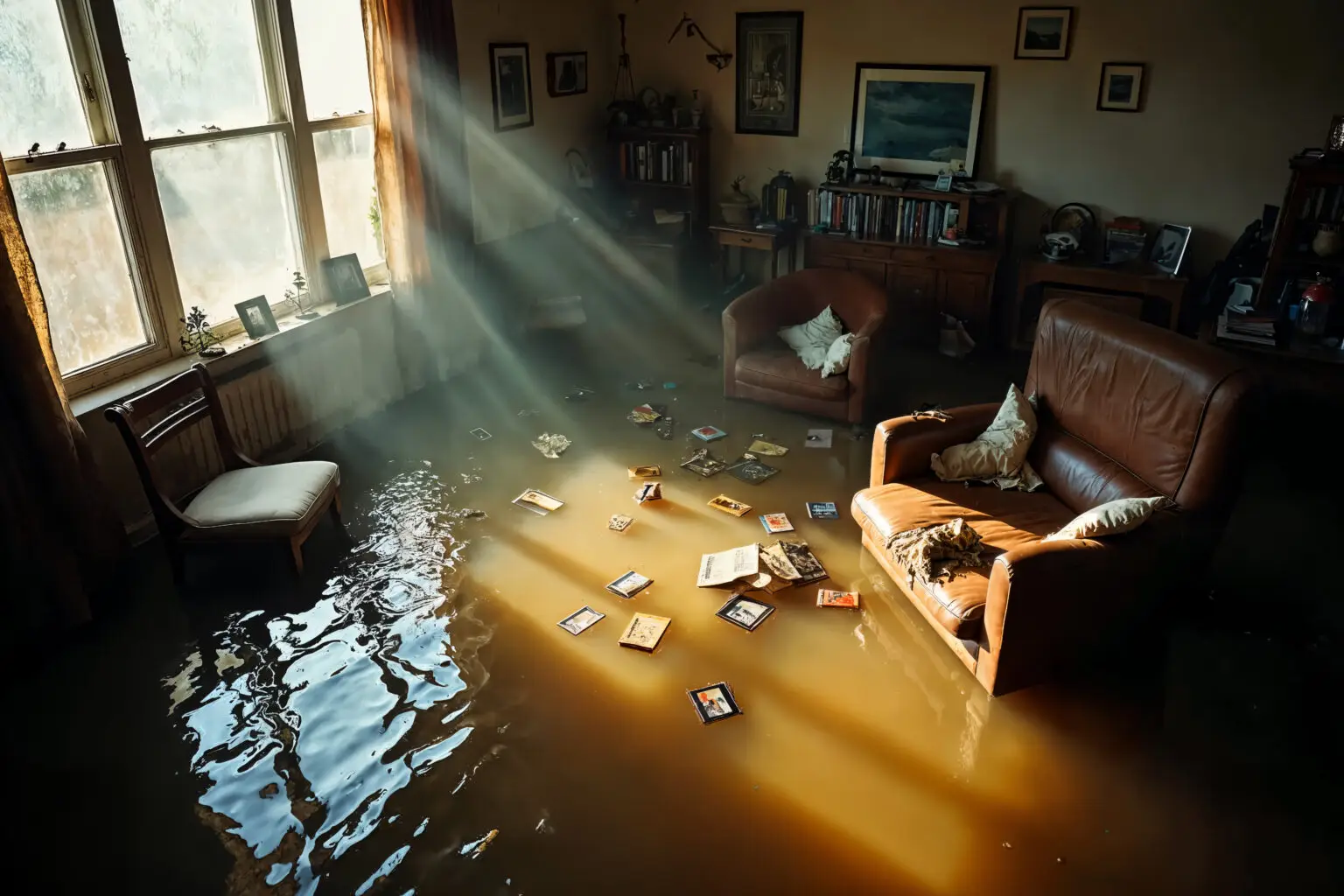
A burst pipe, a failed water heater, a roof that gave way in a November storm. You filed the claim, did what the adjuster asked, and the answer came back: denied, or an amount that wouldn’t cover half the repair. In the Puget Sound, water is the most common homeowners’ claim, and it is also the one insurers dispute most often. Here is what your policy likely says, what Washington law requires of your insurer, and what to do next.
Why water damage claims get denied
Most homeowners’ policies cover sudden and accidental water discharge and exclude gradual damage. Nearly every denial turns on that distinction:
- “Long-term seepage” or “repeated leakage.” The adjuster concludes the leak existed for weeks or months, so the damage is excluded as gradual or as a maintenance issue. This is the most common denial, and it is frequently based on a brief inspection and an assumption.
- “Wear and tear” or “deterioration.” The pipe or appliance that failed was old, so the insurer treats the failure as expected rather than accidental. Many policies exclude the cost of the failed part itself but still cover the resulting water damage; adjusters do not always explain that.
- Surface water or flood. Water entering from outside, ground water, and sewer backup are usually excluded or require a separate endorsement. Whether water came from outside or from inside the home is often disputed.
- Mold caps. Policies commonly limit mold remediation to a small sublimit, even when the mold resulted from a covered loss.
- Late notice or “failure to mitigate.” The insurer says you waited too long to report, or didn’t dry the home fast enough, and the additional damage is on you.
- Scope and pricing. The claim is accepted, but the estimate uses low unit prices, omits code upgrades, or leaves out matching of flooring and cabinets in adjoining rooms. Underpayment, not denial, is the bigger problem in most water claims.
What Washington law requires of your insurer
Washington regulates how insurers handle claims. Among the rules: an insurer must acknowledge your claim promptly, complete its investigation within a set period, and accept or deny the claim within a set time after you submit proof of loss. A denial must be in writing and must state the specific policy provision it relies on.
If an insurer unreasonably denies a claim or payment of benefits, Washington’s Insurance Fair Conduct Act (RCW 48.30.015) allows a policyholder to recover actual damages, and a court may award up to three times that amount plus attorney fees. Before filing suit under IFCA, the policyholder must give the insurer and the Insurance Commissioner 20 days’ written notice, which sometimes prompts a settlement on its own. Separately, an insurer that handles a claim in bad faith can be liable under Washington’s common law and the Consumer Protection Act.
One more deadline matters: many homeowners’ policies require you to file any lawsuit within one year of the loss, which Washington law permits. Adjusters rarely mention it.
What to do now
- Get the denial in writing with the policy language quoted. If you only have a phone call, ask for the letter. You cannot respond to a reason you haven’t seen.
- Read your policy, not the summary. Look for the water damage section, the definitions of “sudden and accidental” and “seepage,” and any mold sublimit. Request a certified copy of the full policy if you don’t have it.
- Preserve the evidence. Keep the failed part, the pipe, the water heater. Photograph everything before demolition. Get the plumber’s or mitigation contractor’s written opinion on the cause and how long the leak existed. That opinion is often the whole case.
- Mitigate, and document that you did. Stop the water, dry the home, prevent mold. Keep receipts. Mitigation is your duty under the policy and your proof against a failure-to-mitigate argument.
- Get your own estimate. A licensed contractor’s line-item estimate lets you compare scope and pricing against the adjuster’s. Differences in scope (missing rooms, no code upgrades, no matching) are where most underpayments hide.
- Respond in writing. State what you disagree with, attach your evidence, and ask the insurer to reconsider. Keep the tone factual. Every letter becomes part of the claim file a court will eventually read.
- Note your deadlines. The one-year suit limitation and the IFCA notice period both run from dates in your file.
Mistakes to avoid
- Tearing out and rebuilding before the insurer or your own expert has inspected. Lost evidence favors the insurer.
- Accepting the first check as full payment. In Washington, cashing a check generally doesn’t waive your right to dispute the amount, but read any release language first.
- Giving a recorded statement about how long you “noticed” the problem without thinking through the timeline. Vague answers become “the insured admitted the leak was longstanding.”
- Relying on the insurer’s preferred contractor to define the scope of repairs. You have the right to choose your own contractor.
When to call a lawyer
A small pricing dispute may resolve with a good contractor estimate and a firm letter. Call an attorney when the claim is denied outright, when the denial rests on a seepage or wear-and-tear theory you dispute, when the gap between the insurer’s number and a real estimate is large, when mold or structural damage is involved, or when the one-year mark is approaching. Some policies also contain an appraisal clause that lets each side name an appraiser to resolve the amount of loss without a lawsuit; it helps in some cases and hurts in others, and it should not be invoked without advice.
How LePley Law Firm helps
Patrick LePley has represented Washington policyholders in property and coverage disputes for decades. He was largely responsible for drafting the text of the Insurance Fair Conduct Act and authored the chapter on appraisal clauses in the WSAJ Insurance Litigation Deskbook for Property Insurance. If your fire, water, or storm claim has been denied or underpaid, call (425) 641-5353 for a free phone consultation. We’ll review the denial letter and your adjuster’s estimate and tell you honestly whether there is a case.
Call (425) 641-5353 for a free phone consultationRelated reading: Insurance Claim Denial · Insurance Coverage Disputes